rebalance earth: Balancing innovation, challenge and governance in an emerging area
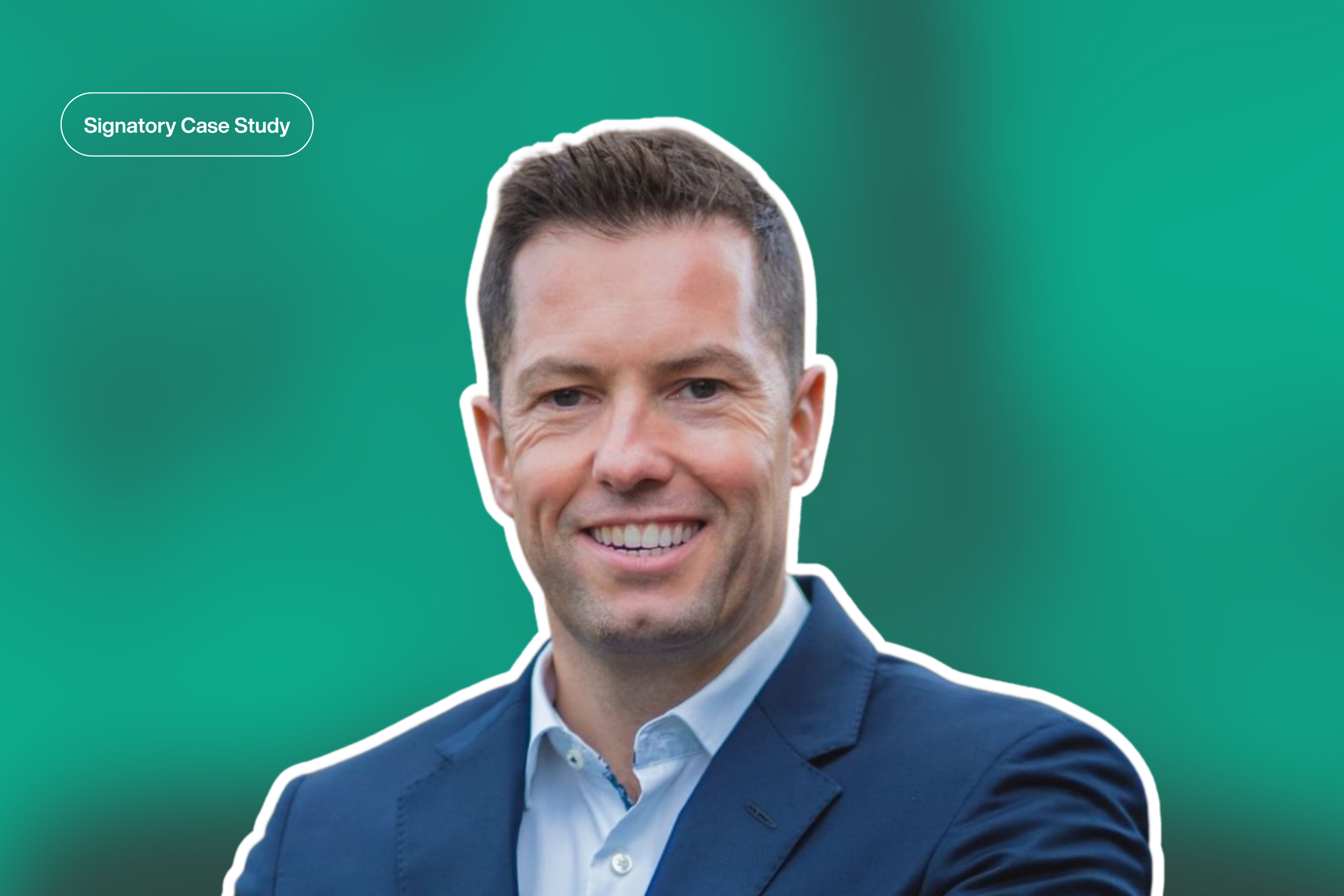
Image: Rob Gardner
In this ACT Signatory case study, Rob Gardner, CEO and co-founder at Rebalance Earth, discusses the importance of building intentional culture, and how the ACT Framework shifted internal conversations, and balancing innovation and governance in natural capital
Becoming an ACT Signatory: what motivated the decision, and how does ACT align with Rebalance Earth’s purpose and culture?
We encourage institutional investors to view nature as investable infrastructure. This commitment requires us to maintain institutional standards within our own operations, not just in our outcomes. We see culture as a core part of our fiduciary infrastructure, providing the judgement, challenge and accountability that support our four returns: financial, natural, social and inspirational, and we know that our investors do too
Becoming an ACT Signatory in July 2025 provided an external framework to turn intention into action, evaluate whether our behaviours align with our ambitions, and increase transparency about areas for improvement.
Any firm can describe its culture, but the true measure is whether its decisions and behaviours withstand scrutiny. As we scale an emerging asset class, this discipline is essential for maintaining trust.
See also: City Hive unveils the ACT List 2025: ‘Fiduciary revolution is just getting started’
How important has it been to build culture intentionally from the outset, rather than letting it evolve organically?
Culture develops regardless of intent. In a business that integrates finance, science, technology, and nature, leaving culture to chance would lead to conflicting assumptions and definitions of success.
From the beginning, we established a shared decision-making framework. During project reviews, we assess commercial, ecological, delivery and social risks collectively, addressing disagreements before capital is committed, when challenge is most valuable.
We also evaluate the effectiveness of our culture with staff surveys and then we act upon the results. When there was an indication that our team wanted more constructive challenge, which we call “locking horns,” and stronger follow-through. In response, we clarified decision ownership and accountability.
Intentional culture is an ongoing process. It requires consistently translating values into behaviour and adapting when evidence calls for change.
How do you ensure purpose translates into everyday behaviours, decision-making and how teams work?
Purpose serves as both our motivation and our standard. It inspires our team by linking individual efforts to restoring nature, strengthening resilience and building a better world. Purpose is only meaningful when it influences decisions.
We assess every project for commercial viability, ecological integrity, delivery risk, social value and verifiable outcomes. We also evaluate buyer demand, from no identified buyer to a signed contract with committed funds. This ensures that a compelling ecological story is not mistaken for an investable revenue case.
This discipline has practical outcomes. We recently stopped pursuing small, bespoke opportunities that were attractive but not scalable or sufficiently demand-driven.
Purpose provides our team with energy and direction. It helps us prioritise, challenge assumptions and, when necessary, decline opportunities.
Natural capital needs collaboration across finance, science, policy and the environment. How has that shaped your culture, and what have you learned?
Natural capital does not fit traditional investment silos, so our culture must also be integrated. A hydrologist, pension investor, ecologist, policymaker and farmer may each define risk differently. Our role is to bring these perspectives together and form a unified investment judgement.
This approach requires translation, curiosity and constructive challenge. No discipline should dominate solely because its language is more familiar to an investment committee. Scientific integrity, commercial viability, local knowledge and delivery capability must all withstand scrutiny.
We have learned that collaboration is not achieved simply by bringing experts together. It requires psychological safety to challenge assumptions, a shared decision-making language and clear ownership of final judgement.
The best answer rarely belongs to one discipline; it emerges from the tension between them.
How do you encourage innovation and experimentation while maintaining robust governance and accountability?
In an emerging market, innovation without governance leads to speculation, while governance without innovation results in stagnation. Our culture must balance both in productive tension.
We experiment with our delivery model, not our standards. We test new methods for coordinating investors, landowners, companies and public bodies, structuring ecosystem-service contracts and converting environmental outcomes into financial value.
However, every opportunity undergoes a disciplined process: due diligence, Investment Committee review, and ongoing monitoring. Risks are clearly defined, assigned to owners and tracked against milestones. Where appropriate, capital is released in stages and outcomes are independently verified.
These controls do not eliminate uncertainty. They reveal it early, prevent optimism from being mistaken for evidence and allow bold ideas to earn institutional trust.
Were there aspects of the ACT Framework that sparked new conversations or challenged assumptions inside the business?
Yes. The most valuable challenge was determining whether the culture we experienced was the same culture everyone could understand, demonstrate and rely on as we grew.
In a founder-led business, expectations are often communicated through close interaction: how decisions are made, what good judgement looks like and when to challenge. ACT prompted us to consider whether these expectations were well documented and able to withstand growth. It also challenged the assumption that a collaborative culture automatically creates accountability.
ACT shifted the conversation from our intended culture to what people actually experienced.
See also: ACT Signatory Journey: We have long believed culture is a material driver of long-term outcomes
As the natural capital market develops, what role will culture play in maintaining trust and credibility?
In natural capital, trust is integral to the investment case. Investors underwrite outcomes that may take years to materialise. Farmers and communities commit land, income and place based on our assurances. Companies pay for outcomes, while regulators and scientists expect integrity.
Contracts, models and monitoring are important, but culture determines how we respond when reality diverges from the plan. It influences whether problems are disclosed early, local knowledge is respected, and scientific evidence is protected from commercial pressure.
Trust is earned more by our actions during challenges than by initial promises. This means reporting setbacks, escalating underperformance, maintaining independent verification and refusing to overstate outcomes.
As the market grows, credibility will belong to firms whose culture remains rigorous under pressure.
What does success as an ACT Signatory look like, and what advice would you give other firms?
Success means that investors, farmers, community partners and new colleagues all experience the same organisation: accountable, open, rigorous and true to its purpose.
This should be evident in daily behaviour. Risks are escalated earlier, decisions are clearer, challenge is candid but constructive, and commitments are fulfilled. As we grow, the test is whether these standards strengthen rather than weaken.
My advice is to use the framework to achieve internal clarity. Treat it like an investment review: define the culture you want to create, gather evidence of actual experiences, identify gaps, assign ownership and take action.
The most valuable question is not, “What are our values?” It is, “What happens here when the pressure is on?”
A strong culture improves judgement, reduces risk and increases impact. It should also empower talented people to challenge one another, perform at their best, and find satisfaction in their work.
Read more: Why culture matters (and why clients should care)