
ACT Signatory Journey: the quality of decisions we make for clients depends on the environment we create for our people
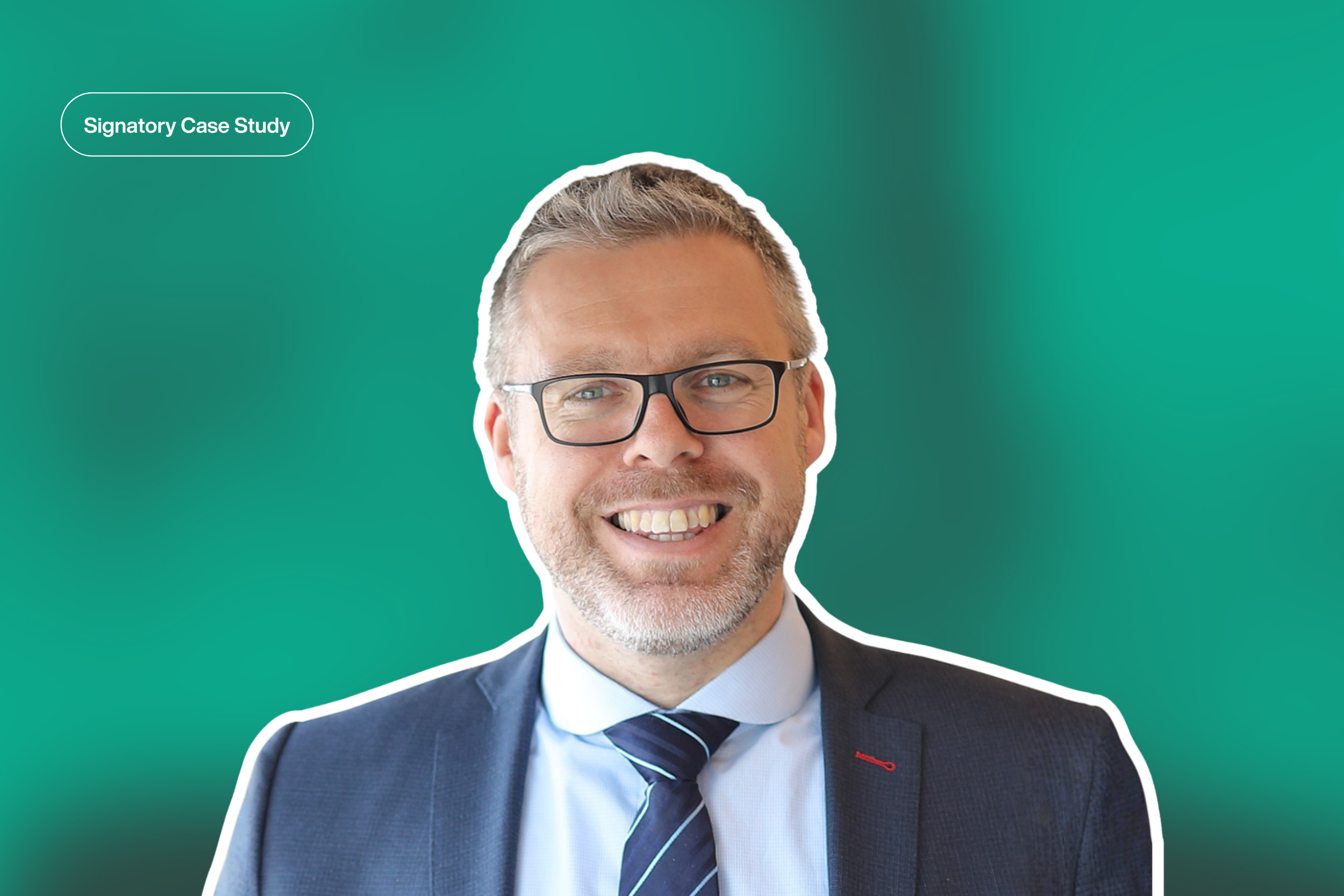
Image: Ed Venner
Ed Venner, chief client officer at Royal London Asset Management, discusses how culture is a part of the company’s ongoing conversations amid regular assessments of colleague engagement, leadership behaviours and client feedback
Royal London Asset Management became an ACT Signatory last year. What prompted that decision, and how does the ACT Framework complement the culture you have been building internally?
At Royal London Asset Management, culture has always been something we see as a business advantage rather than a standalone HR initiative. As a long-term active investment manager, we know that the quality of decisions we make for clients depends on the environment we create for our people.
Joining the ACT Framework was a natural extension of that thinking. It provides an independent, structured way of assessing organisational culture and encourages firms to move beyond good intentions towards measurable, continuous improvement.
We’ve already invested heavily in developing a culture centred on collaboration, accountability and putting clients first. ACT gives us another lens through which to challenge ourselves, benchmark our progress and ensure our culture continues to evolve alongside our business.
Royal London is owned by its customers rather than external shareholders. How does being a mutual shape your organisational culture, and does it create greater transparency or accountability around the way culture is measured and discussed?
Being part of a mutual fundamentally shapes the way we think and act.
As a member-owned mutual society, our decisions are guided by the long-term interests of our clients and customers rather than the expectations of external shareholders. That creates a clear connection between ownership, accountability and culture: it encourages us to think carefully about the long-term consequences of our decisions, how we manage risk, and how we deliver sustainable value over time.
In practice, that means we can take a longer-term view, with a culture built around investment discipline, responsible decision making and consistently good client outcomes.
It also creates a strong sense of accountability. We regularly assess how we’re performing, not just financially but through colleague engagement, leadership behaviours and client feedback. Culture isn’t something that’s discussed once a year; it’s part of ongoing conversations about how we work, make decisions and deliver for clients.
Many investment firms talk about culture, but it can still feel difficult to define. What does a strong investment culture look like at Royal London Asset Management, and how do you know whether it’s working?
Investment management is ultimately about judgement and decision making and we believe that a diverse and inclusive culture enables better decisions. That means creating an environment where diverse perspectives are welcomed, debate is encouraged and people have the confidence to speak up.
We look at a range of indicators rather than relying on any single measure. These include colleague engagement, retention, client feedback, leadership effectiveness and, importantly, how people demonstrate our values in day-to-day decision making. Culture is reflected in behaviours rather than slogans.
As investment management becomes increasingly driven by technology, data and AI, what aspects of culture do you think will become even more important in helping firms make better long-term decisions?
Technology and AI will undoubtedly improve the speed and quality of analysis, but they won’t replace human judgement.
As these tools become more sophisticated, qualities such as curiosity, critical thinking, collaboration and ethical decision making become even more important. Organisations will need cultures where people are comfortable questioning outputs, challenging assumptions and combining technology with experience.
Ultimately, technology should enhance decision making, not replace accountability.
See also: In the age of AI, culture may become active management’s greatest differentiator
How do you ensure that the values and behaviours you want to promote are reflected in day-to-day investment decision making, rather than simply existing as statements on a website?
Culture must be embedded into how people work every day.
That starts with leadership setting clear expectations, but it’s reinforced through objectives, performance conversations, collaboration across investment teams and how success is recognised and rewarded. Culture is ultimately about how people behave and operate when leaders are not in the room.
For us, putting clients first isn’t simply a value statement, it influences how we construct portfolios, manage risk, engage with companies and work across functions. The behaviours we encourage are the ones that help deliver consistently good client outcomes.
The ACT Framework encourages firms to think about culture in a structured way. Were there any areas of the ACT Framework that challenged your assumptions or prompted new conversations within the business?
One of the strengths of the framework is that it encourages organisations to step back and look at culture in the round.
Like many firms, we already had a good understanding of our culture, but ACT prompted useful conversations about how we measure it, where we could strengthen consistency across the organisation and how we continue to evolve as the business grows.
The most valuable aspect wasn’t validating what we already believed, it was encouraging ongoing reflection and continuous improvement.
From your perspective, why should institutional clients and asset owners care about organisational culture when selecting an investment manager? What risks can be overlooked if culture isn’t part of the due diligence process?
Culture has a direct impact on the quality and consistency of investment decision making and on the risk management in an organisation.
A healthy culture supports robust challenge, effective risk management, collaboration and long-term thinking. Conversely, weak cultures can create blind spots, discourage debate or incentivise short-term behaviour.
Institutional clients rightly spend significant time assessing investment processes and performance. Understanding how an organisation makes decisions and the culture that underpins those decisions provides valuable insight into whether that performance is likely to be sustainable.
Looking ahead, what would success as an ACT Signatory look like over the next few years, both for Royal London Asset Management and for the wider investment industry?
For us, success means continuing to strengthen a culture that helps our people perform at their best and ultimately delivers better outcomes for clients.
We would like our firm and our industry to become more diverse and more inclusive and to better reflect our clients and the communities in which we operate.
We don’t see becoming an ACT Signatory as an end point; it’s part of an ongoing commitment to learning and improvement. We want to continue measuring ourselves, challenging ourselves and adapting as our business evolves.
More broadly, we’d like to see culture become a more established part of industry conversations. Investment management has always focused on performance and process, but culture is one of the foundations that enables both. The more transparent firms are about how they build and sustain strong cultures, the stronger the industry will become.
See also:
AI in investment: Consensus positioning, fee pressure and spotlight on culture